Nigeria's Comptroller General of Customs Wins Second Term as WCO Council Chair, Receives Presidential Tenure Extension
Nigeria's Comptroller-General of Customs, Adewale Adeniyi, has returned from Brussels with a renewed international mandate after the World Customs
igeria's Comptroller-General of Customs, Adewale Adeniyi, has returned from Brussels with a renewed international mandate after the World Customs Organisation Council elected him to serve another year as Chairperson at its 147th and 148th Council Sessions, a development that consolidates Nigeria's influence at the heart of global customs administration.
Adeniyi had travelled to Brussels expecting to hand over the chairmanship at the conclusion of his term, but the Council instead renewed his mandate in recognition of his leadership and commitment to advancing global customs standards.
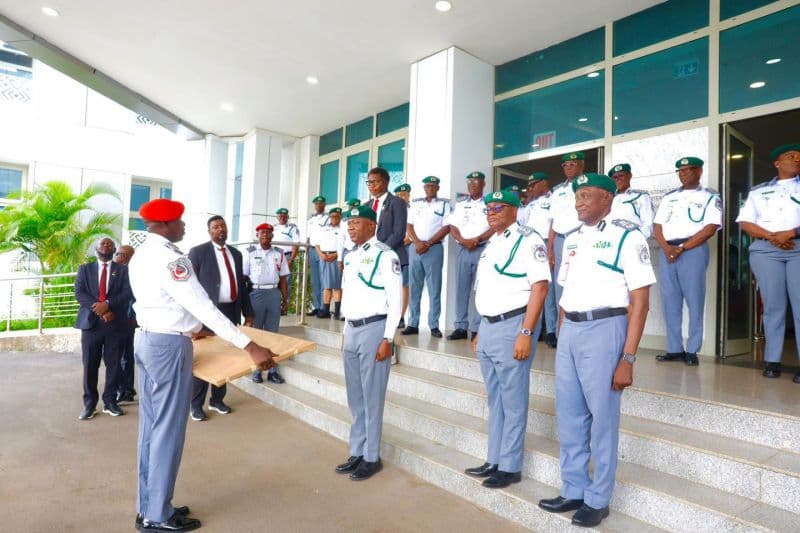
"I went to Brussels believing I was going to hand over, but the outcome was different. The Council renewed my tenure for another one year, and I dedicate this achievement to the entire Nigeria Customs Service," he said upon his return to the Nigeria Customs Service headquarters in Maitama, Abuja on June 29, 2026.
The international renewal came alongside a separate development on the home front, with President Bola Tinubu extending Adeniyi's appointment as Comptroller-General of Customs for a further six months.
The dual milestones were celebrated by members of the NCS management team, who received him warmly and presented him with a souvenir in appreciation of his contributions to the growth and transformation of the Service.
The convergence of both developments reinforces confidence in Adeniyi's leadership at a critical period for Nigeria's customs reform agenda. His continued chairmanship of the WCO Council is expected to strengthen Nigeria's voice in shaping international trade facilitation frameworks, deepen bilateral and multilateral customs partnerships, and accelerate the modernisation drive within the Nigeria Customs Service.
For procurement and supply chain professionals operating across Africa, the development carries practical significance.
Customs leadership at the WCO level directly influences how trade policies are designed, how border processes are harmonized, and how compliance frameworks evolve across the continent, all of which have a direct bearing on the cost, speed, and predictability of cross-border supply chains.