APSCHA 2026: Akin Naphtal urges leaders to reposition African supply chains
CEO of InstinctWave Group and host of the 8th Africa Procurement and Supply Chain Summit and Awards (APSCHA 2026) calls on African governments and businesses to reposition procurement, supply chain, and logistics
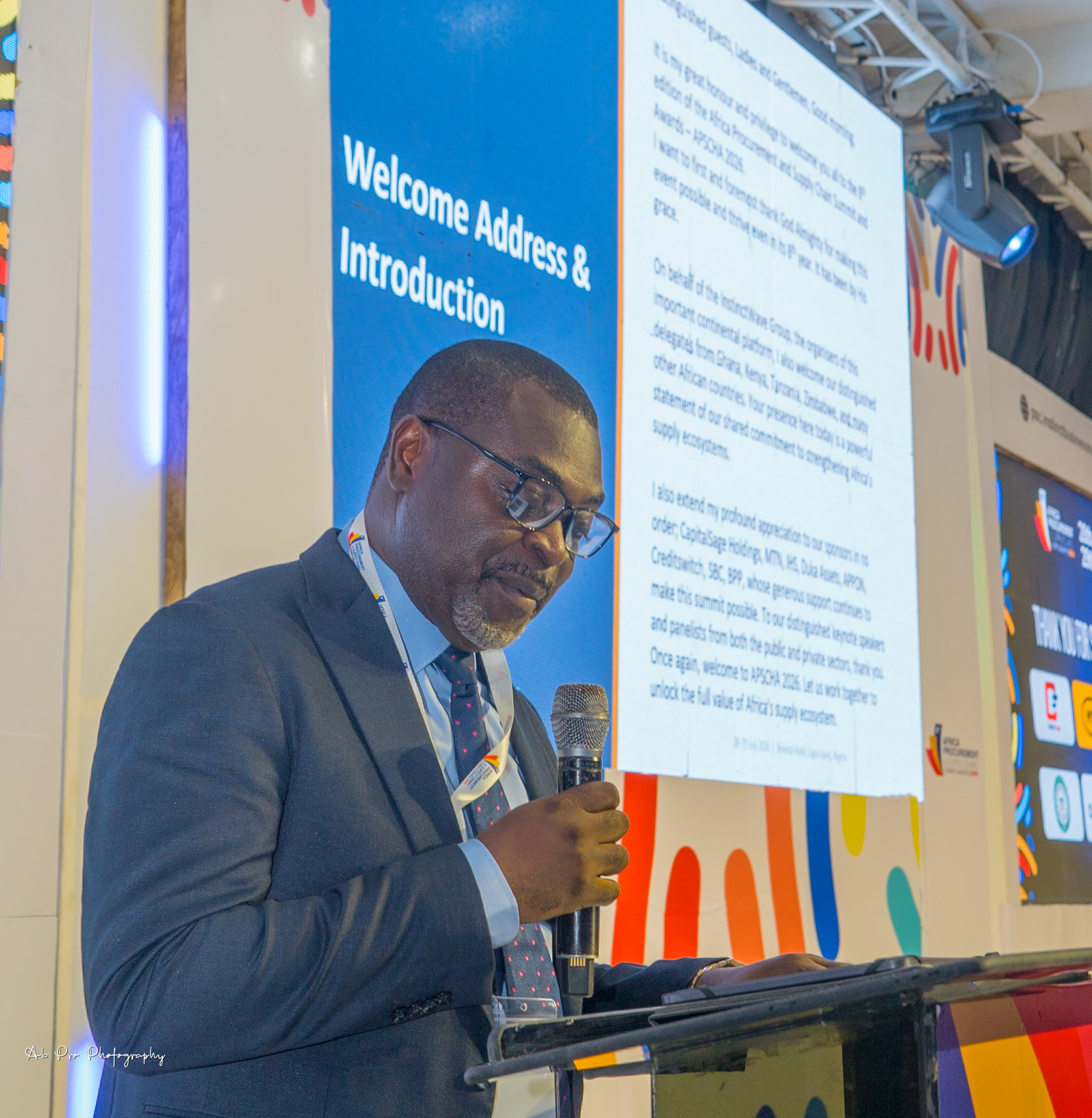
hief Executive Officer of InstinctWave Group and host of the 8th Africa Procurement and Supply Chain Summit and Awards (APSCHA 2026), Akin Naphtal, has called on African governments and businesses to reposition procurement, supply chain, and logistics from traditional cost centres to strategic enablers of profitability, resilience, and long-term economic competitiveness.
Delivering the welcome address at the opening of APSCHA 2026 in Lagos, Naphtal welcomed delegates from across the continent and challenged industry leaders to seize the opportunity to transform Africa's supply ecosystem through collaboration, innovation, and strategic leadership.
Speaking under the theme, "From Cost Centre to Competitive Advantage: The True Impact of Procurement, Supply Chain & Logistics on Organizational Profit and Value," Naphtal said supply chain management has evolved into one of the most critical determinants of business success in an increasingly volatile global economy.

"The message is clear: supply chain is no longer a back-office function. It is the primary lever for cost control, resilience, and competitive advantage," he said, citing global research showing that organisations with strong supply chain leadership are significantly more profitable than their peers.
Naphtal noted that the global supply chain market is valued at approximately US$19.3 trillion, with nearly 80 percent of company revenues flowing through supply chain activities.
He added that best-in-class procurement practices can deliver cost reductions of up to 50 percent, while companies with top-performing supply chain functions are as much as six times more profitable than competitors.

Turning to Africa, he highlighted the continent's annual procurement expenditure of more than US$500 billion, arguing that significant economic value continues to be lost through inefficient logistics, weak infrastructure, and limited local sourcing.
According to Naphtal, logistics costs account for between 20 and 30 percent of GDP in many African economies, compared with 8 to 10 percent in developed markets.
He also pointed to the African Continental Free Trade Area (AfCFTA) as a transformative opportunity that will require stronger ports, customs systems, digital infrastructure, and regional supply chains to unlock its full potential.
He further stressed that procurement delivers measurable financial value beyond cost savings, noting that every one percent reduction in procurement spending can improve an organization's bottom line by between two and three percent. Strategic sourcing, resilient logistics, and sustainable procurement, he said, are increasingly becoming boardroom priorities that directly influence profitability and investor confidence.

Naphtal also challenged organisations to elevate procurement leaders into strategic decision-making roles, observing that many Chief Procurement Officers remain excluded from executive discussions despite the critical role supply chains play in managing risk, capital allocation, and sustainability.
"Procurement should be represented at the strategy table—not just the budget table," he said, urging executives to communicate supply chain performance in terms of business value, resilience, EBITDA growth, and environmental, social and governance (ESG) impact.
Highlighting emerging trends, Naphtal identified artificial intelligence and digitalization as the next frontier of procurement transformation.

He said AI-powered sourcing, predictive analytics, digital spend visibility, autonomous logistics, and automated ESG screening are reshaping procurement functions globally and enabling organisations to make faster, smarter sourcing decisions.
He concluded by urging procurement professionals to embrace digital transformation, invest in continuous professional development, and strengthen collaboration across borders to build resilient supply chains capable of supporting Africa's industrialisation agenda.
The two-day summit, which attracted more than 200 delegates from Nigeria, Kenya, Ghana,, provides a platform for procurement and supply chain leaders to share best practices, explore the role of AI and sustainability, strengthen continental partnerships, and celebrate excellence across Africa's procurement and logistics ecosystem.


